Inflammation and the IL-17 pathway
Inflammation is a complex biological response that protects the body against infections, tissue injury, and harmful stimuli by activating both the innate and adaptive immune systems. Among the key mediators of chronic inflammation, the Interleukin-17 signaling pathway (IL-17 pathway) has emerged as a critical driver of several autoimmune and inflammatory diseases.
The IL-17 family, particularly Interleukin-17A (IL-17A), is primarily produced by Th17 cells and acts on epithelial cells, fibroblasts, and macrophages to stimulate the production of pro-inflammatory cytokines, chemokines, and matrix-degrading enzymes.
This signaling cascade promotes the recruitment and activation of neutrophils, amplifying local inflammation and contributing to tissue damage when dysregulated.
IL-17 as a therapeutic target
Excessive IL-17 signaling has been strongly associated with diseases such as Psoriasis, Rheumatoid Arthritis, Ankylosing Spondylitis, and inflammatory bowel disease, making the IL-17 pathway an important therapeutic target for next-generation biologics and antibody-based therapies.
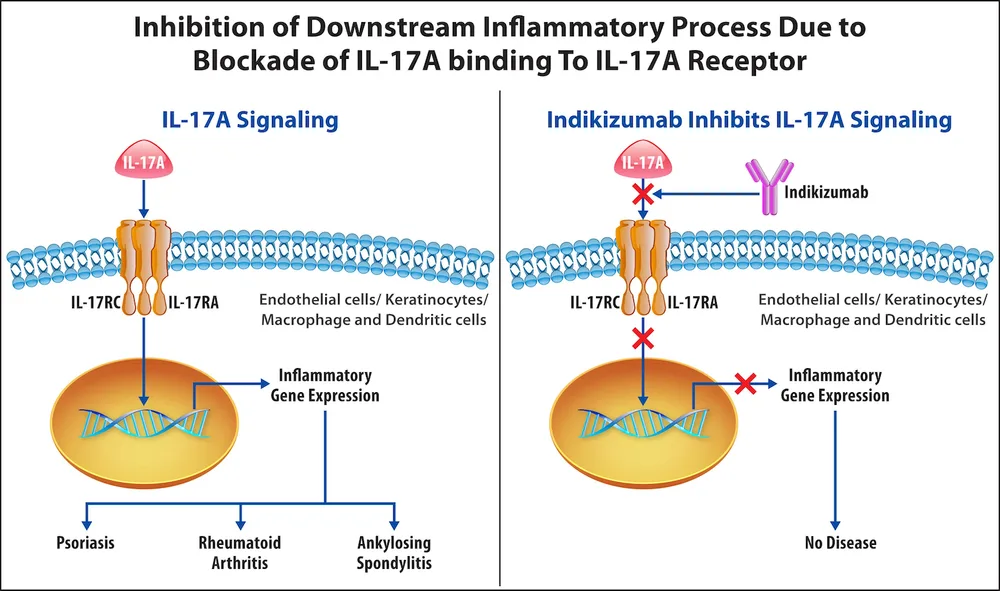
Indikizumab — anti-IL-17A antibody
At IMGENEX INDIA we have developed a humanized anti-IL-17A antibody, Indikizumab, that is as effective as commercially available anti-IL-17A therapies such as Cosentyx. View our pipeline.